
Trace an Edinburg Street Address
The address chain in Edinburg starts with a street address and moves through an HCAD or tax account, a parcel or geo ID, a legal description, and then a recorded deed or plat. From there, city development material, dated street listings, voter verification, and probate or obituary material can add separate pieces. Each source answers a different question. A tax account can tie a number to an owner and parcel, while a recorded instrument can document a transfer. Neither one is a complete household list. Use the same street number, parcel identity, and legal description as cross-checks before connecting records.
- Enter the street number and street name in the Hidalgo County Appraisal District or tax search. HCAD advises omitting directional prefixes and suffixes when searching an address.
- Record the situs address, owner name, account or CAD reference, geo ID if displayed, and the legal description. Compare the situs with the tax mailing address instead of treating them as interchangeable.
- Use the public appraisal-map entry point to place the parcel on the street. The located map metadata supports parcel geometry and map position, but the current live map controls need visual confirmation.
- Search the owner in Hidalgo County official records, first as grantee for an acquisition deed and then by legal-description fields if the street wording does not return a match.
- For an earlier household question, check a dated street or reverse listing and pair it with a census or other dated source. A name on a parcel record alone does not establish every person at the address.
Edinburg Street Directory Tax Fields
The county tax portal has a useful two-step design for a street-by-street search. Step 1 accepts an owner name, property address, account number, CAD reference, or fiduciary number. Step 2 can narrow the first result with another criterion. The portal itself shows a surname plus a street as an example, so a surname in the first field and the street name in the second field can narrow an ownership pattern. It can identify tax accounts collected by Hidalgo County, not all people who might be connected to the street.
| Tax search field | Entry type | Use for an Edinburg address | Verified format note |
|---|---|---|---|
| Step 1 search text | Text | Start with an address, owner, account, CAD reference, or fiduciary number. | A search value is needed to run the query. |
| Step 1 Search By | Selector | Choose Owner Name, Property Address, Account No., CAD Reference No., or Fiduciary No. | Owner uses last name first; property address starts with the entered text. |
| Step 2 search text | Text | Add a second term to limit a broad first result. | Optional. |
| Step 2 Search By | Selector | Pair an owner term with Property Address, or use another account key. | Owner, address, account, and CAD reference are available. |
| Search | Button | Run the selected criteria and inspect the matching account. | Begin a New Search is also provided. |
The Hidalgo County tax search shows those two criteria and its address, owner, account, CAD-reference, and fiduciary routes.
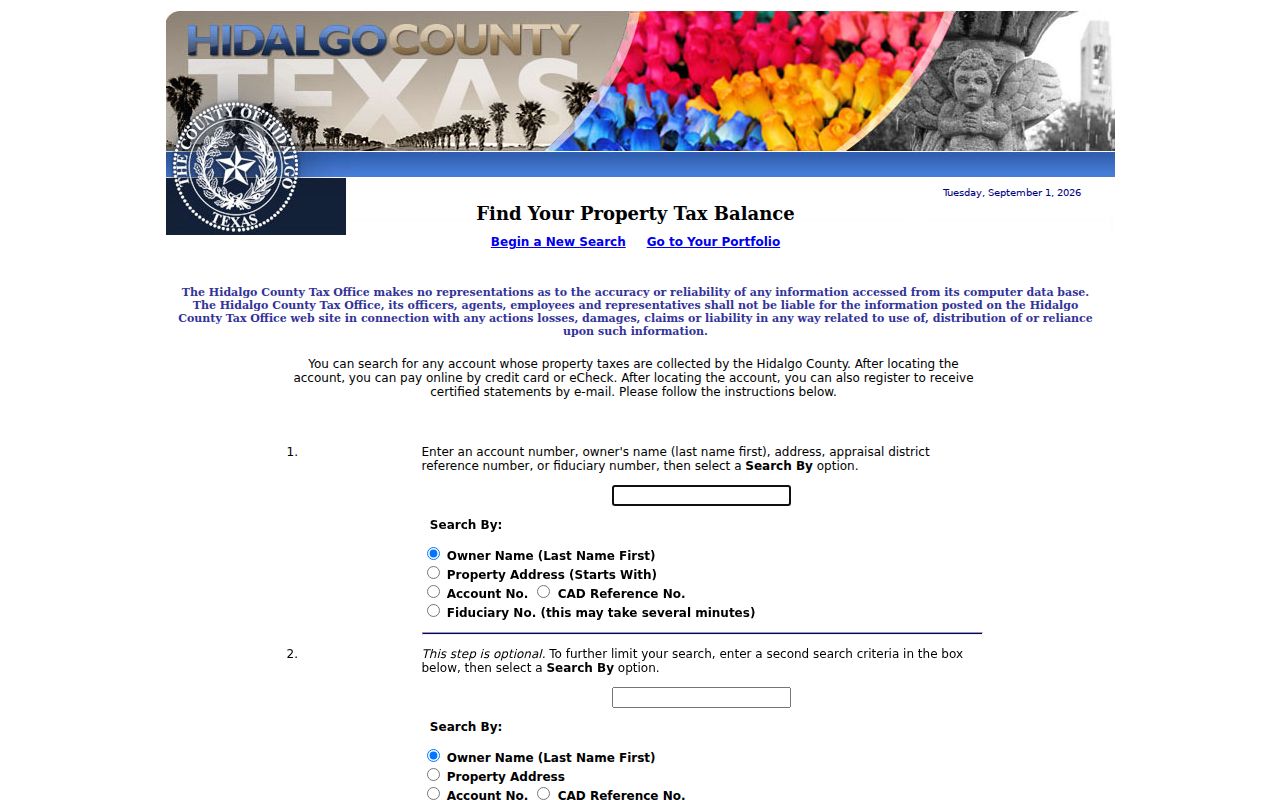
Once an account is located, the tax portal also offers payment and certified-statement routes. A statement or balance is tax-account evidence, so keep it separate from the deed and directory evidence that may be needed for an address history.
Read Edinburg Parcels by Street
The Hidalgo County Appraisal District is the owner-and-address starting point, and its public map entry points to a related appraisal-map service. The documented workflow is to zoom or search to an Edinburg street, select the target parcel, note its geo ID and legal description, and then follow the associated property record. The ArcGIS item names an appraisal map, but the research did not expose the current search labels, identify button, available layers, adjacent-parcel control, or map update date. Those mechanics should be confirmed in the live viewer before relying on a particular button.
See the Hidalgo CAD appraisal-map item for the mapped parcel entry point.
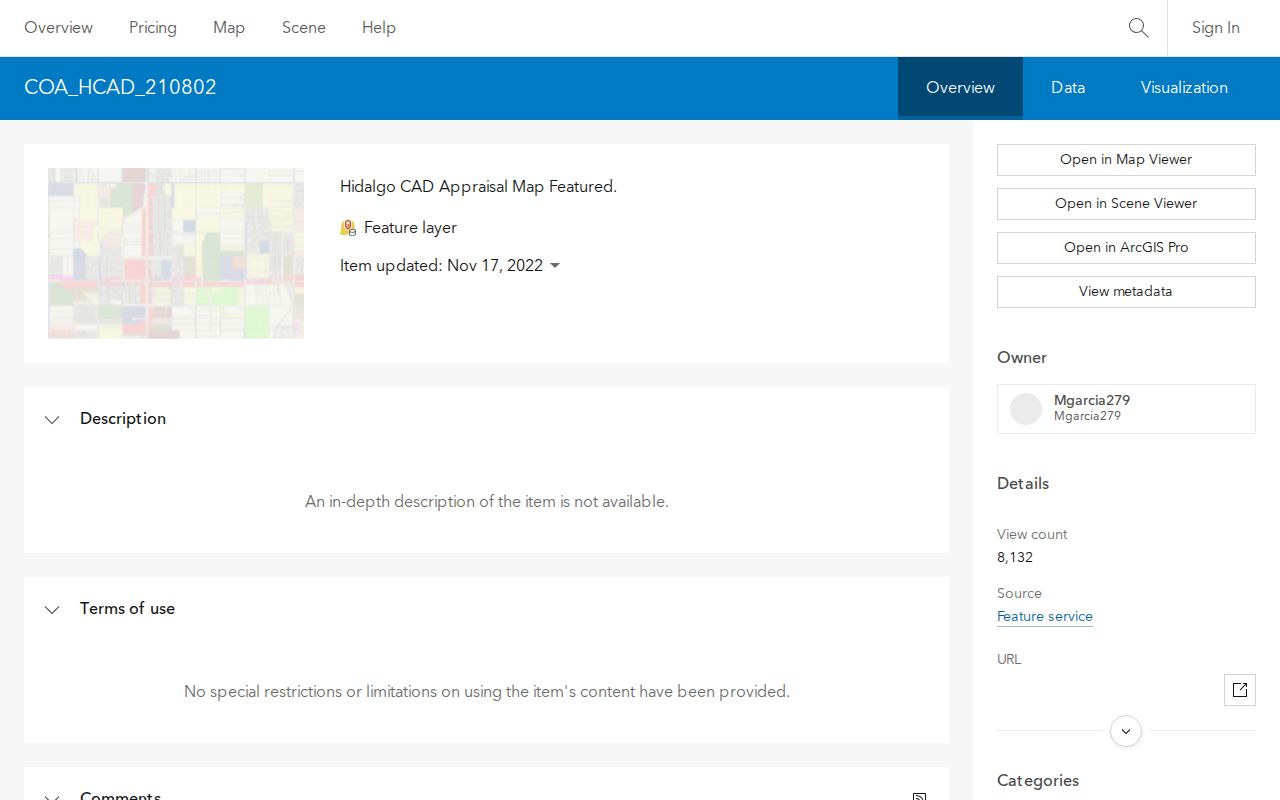
Parcel geometry can help distinguish two similar street numbers and show adjoining lots. It does not prove a boundary, household membership, or a particular person’s present location without support from the relevant custodian record.
Search Edinburg Street Directory Deeds
Hidalgo County’s official-records portal supplies the transfer layer behind an address. In Advanced Search, select Property Records and use Party Names, Grantor, or Grantee in the displayed LASTNAME FIRSTNAME format. Recorded-date and instrument-date ranges can separate a recent transfer from an older one. When an address does not appear as expected, the portal exposes Lot, Block, Legal Description, Book, Volume, Page, document-number, and document-image phrase fields. That makes the legal description more durable than a street string when a tract was replatted, split, combined, or described by acreage.
The Hidalgo official-records Advanced Search documents those party, date, document, and legal-description controls.
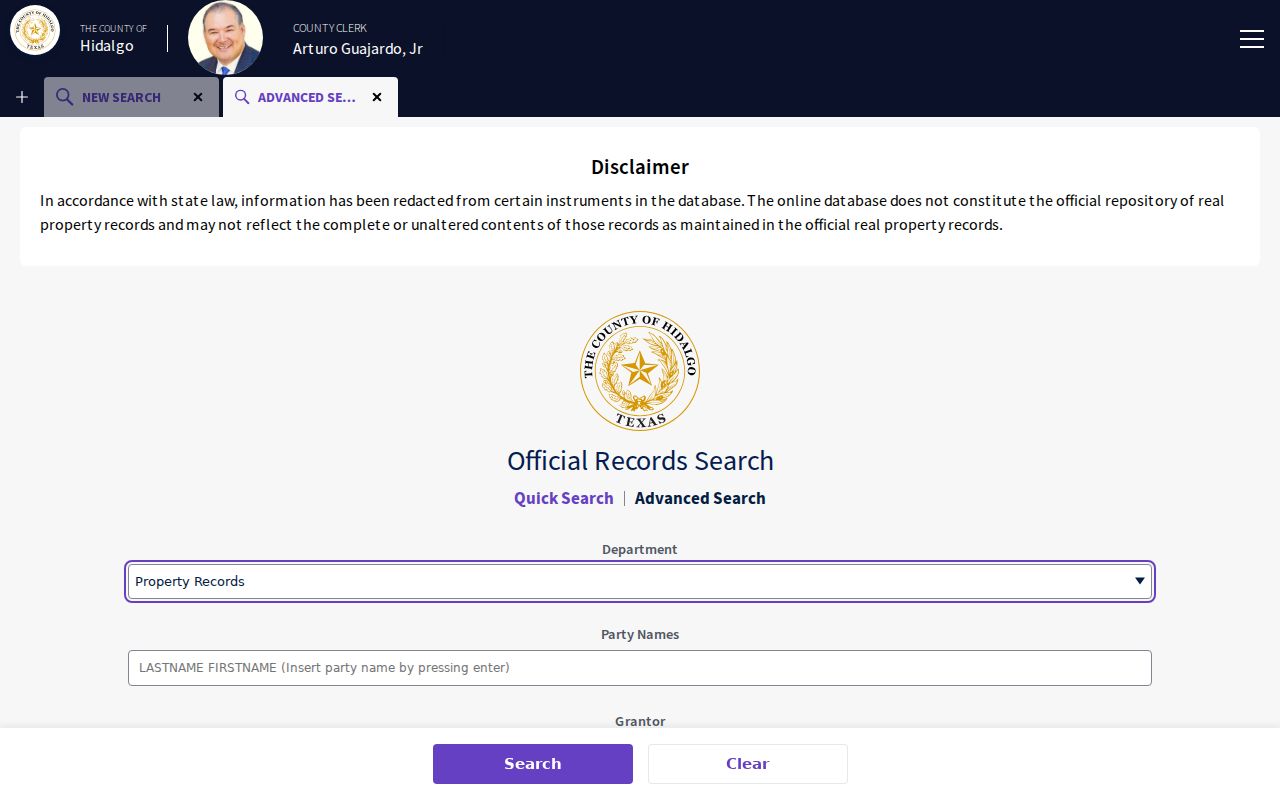
Read the resulting instrument before drawing a conclusion. The public index was certified through August 24, 2026 when inspected, but the portal did not disclose its earliest online year, complete document-type list, image pricing, or image coverage.
Edinburg Address Record Coverage
Street records are useful because their keys overlap, not because they form one combined roll. Parcel and tax sources carry ownership and account clues. The County Clerk’s index supplies recorded transfers and plats. City channels can supply development or report context, while elections verification and historical listings are more limited and purpose-specific. Match a result through its address, parcel key, legal description, date, and named party before relying on it.
| Address record | Custodian | What it can show | Access route |
|---|---|---|---|
| HCAD parcel card | Hidalgo CAD | Owner, situs and mailing address, geo or account identity, legal description, and appraisal or exemption clues. | Public property search; live card fields were not fully captured. |
| Tax account | Hidalgo County Tax Office | Owner, address, account, CAD reference, tax balance, and statement options. | Public two-criterion web search; Tax Office phone is 956-318-2157. |
| Parcel map | HCAD / ArcGIS | Parcel position, geometry, nearby parcels, and available map information. | Public map entry; current identify and layer controls need confirmation. |
| Deed and plat index | Hidalgo County Clerk | Grantor, grantee, dates, document data, subdivision, lot, block, and legal description. | Publicsearch quick or advanced index; image and copy rules were not fully displayed. |
| Development or code record | City Planning, county Planning, or 311 | Zoning, platting, permit, complaint, or response context tied to an address. | City and county channels; no public city address index was located. |
Tax, deed, and city records may all use the same street number but serve different purposes. A mail address can be for correspondence, and a tax exemption is an administrative clue, not conclusive proof that a particular person is at the parcel today.
Edinburg Street Directory Terms
Older documents often lose the modern street wording, so a few field names matter. Write them down exactly, including a directional abbreviation or unusual spelling. A legal description can bridge a current parcel to a much older deed even when the street label changes. The same care helps when the tax mailing address differs from the physical parcel.
- Parcel
- A mapped tract of land used by the appraisal and tax systems. Its account, CAD reference, or geo ID can help connect a street number to other records.
- Situs address
- The physical location of the parcel. It is distinct from the address where the tax bill is sent.
- Legal description
- The title identity of land, often a subdivision, lot, block, acreage, abstract, or metes-and-bounds description. Deeds and plats depend on it when street text fails.
- Criss-cross directory
- An address or street section of a historical directory that can be read from number to listed occupant, if that edition includes one.
For an old Edinburg street search, record the street number as written, the parcel key, the legal description, and the date. That small log makes it easier to test whether later results concern the same property.
Use Edinburg Street Directory Listings
A historical directory may have an alphabetical section, business pages, a telephone list, and a street-address section. The Texas State Library describes common entry fields such as name, address, telephone, spouse, and sometimes occupation or an ownership-status mark. Located Edinburg volumes fall in 1941, 1943, 1945, 1947, 1949, 1952, 1954, and 1957. Missing years are gaps in the located run, not proof that an address was empty or that a person had left.
Use the street section only after checking the volume’s own key and date. The collections, access restrictions, and entry-reading details belong with the Edinburg city directory collections; an address trail only needs the dated occupant clue from that work. Sekula Memorial Library can help identify catalog, newspaper, yearbook, and database leads, although the research did not verify an exact local reverse-directory shelf.
Note: A directory is edited historical evidence, so confirm a household connection through the parcel, deed, census, obituary, or another dated record.
Reach Edinburg Address Custodians
When the web search is incomplete, use the office that holds the record. The Hidalgo County Clerk is at 100 N Closner in Edinburg, accepts hand-delivered or mailed county forms, and can be reached at 956-318-2100 during weekday office hours. The county’s written-request process is for existing records, not a request for staff to create new research. Older deed and tax material has an archival route through UTRGV and the Texas State Library microfilm guide.
- Use the public HCAD and county tax portals for a current parcel or tax-account start.
- Search the County Clerk’s quick or advanced index, then call, visit, mail a form, or submit a written records request when the online result is incomplete.
- Ask City Planning & Zoning about development, zoning, and platting records through its Edinburg planning channel; the live development-map and permit fields were not captured.
- Use Edinburg 311 for address-specific reporting or code channels, not as a resident index. The city lists 311 and 956-259-4357 for that route.
- For voter status, use the Texas voter-information route or call Hidalgo Elections at 956-318-2570 for named-person registration and correct-address verification.
The Hidalgo Elections Department lists the county’s registration contacts and related service information.
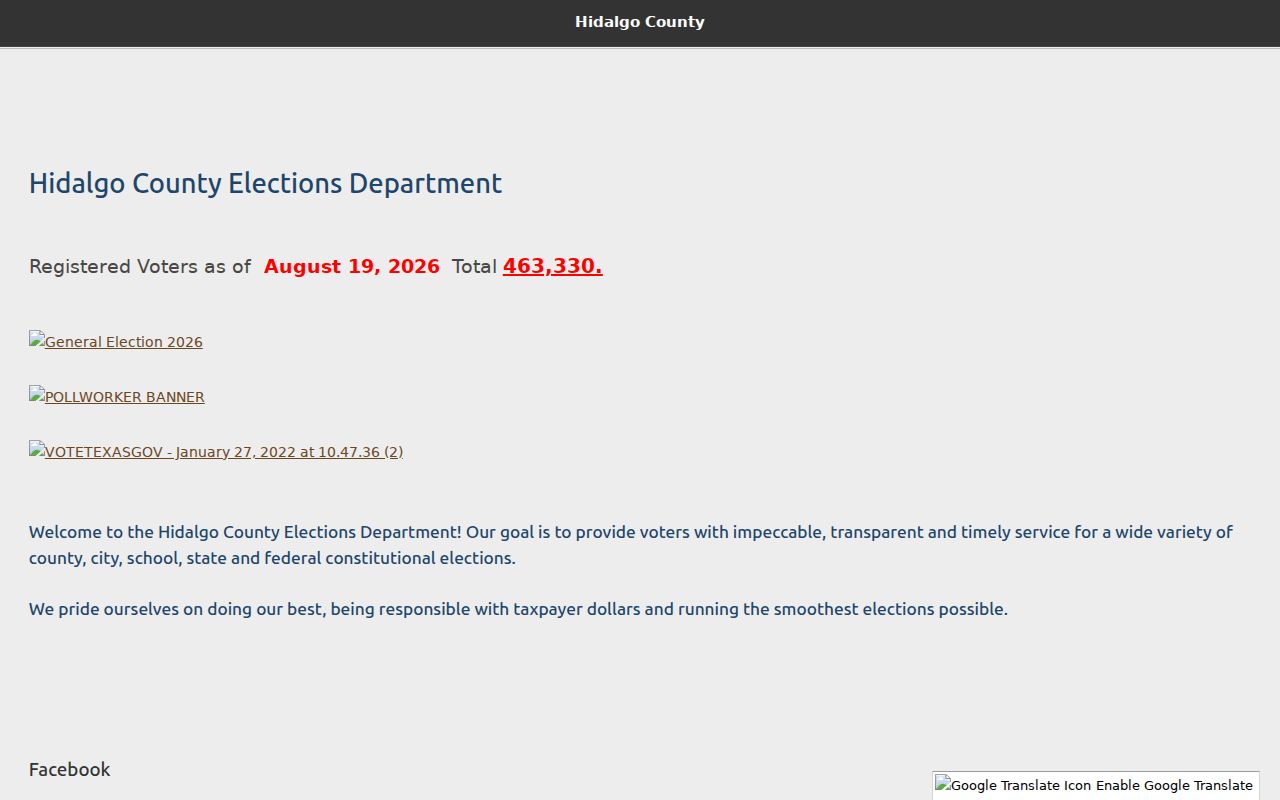
Election records have statutory limits, and protected participants can have substitute or shielded addresses. A permitted records request uses the Hidalgo Elections public-information form; request only the minimum needed for a lawful records purpose.
Edinburg Street Directory Limits
A street search does not produce a complete list of people at every address. A deed identifies parties to a transaction. A tax mailing address may belong to someone away from the parcel. Historical listings can omit a household or record it under an abbreviation. Driver-license addresses, utility customer lists, delivery-route information, protected voter information, and some court material are not open street indexes. Do not infer an occupant from an adjacent parcel owner, an owner mailing address, or a single directory entry.
Lawful use. Edinburg address records are for personal, family-history, civic, or property-curiosity research. Do not use a record to stalk, harass, intimidate, or harm anyone.
Edinburg Streets Across Names
Historic address work can require more than a modern city name. Hidalgo County’s county-seat history records that the settlement selected in 1908 was called Chapin and that it was renamed Edinburg by 1911. Irrigation arrived in 1915 and accelerated local development. For a pre-1911 deed, minute, or newspaper item, search the county, legal description, and Chapin, Edinburg, and Hidalgo name variants. Spanish accents, compound surnames, initials, and abbreviated street directions also deserve separate searches.
That continuity check is especially important when a deed index uses a party name or legal description rather than a complete current street address. The current official portal is useful, but its earliest online coverage remains unconfirmed, making the microfilm and clerk-counter routes important for older records.